


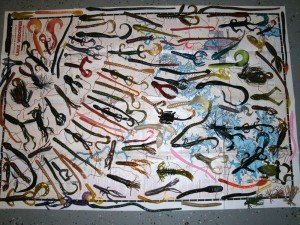
Lures. Its been said, “ they are tools we choose to successfully get the job done.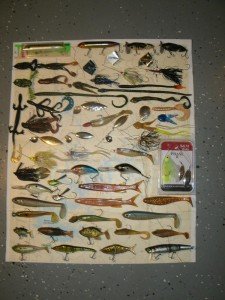
” LAY LAKE’S BEST LURES FOR JANUARY AND FEBRUARY ”
By Reed Montgomery / Reeds Guide Service
Birmingham, Alabama
Website www.fishingalabama.com
Phone (205) 663-1504
TARGETING THE COOSA RIVER SPOTTED BASS AND LAY LAKE’S
BIG LARGEMOUTH BASS DURING THE MID-TO-LATE WINTER PERIOD TAKES SPECIAL CHOICES, ESPECIALLY WHEN IT COMES TO LURE SELECTION!
* Variables. Its been said for all seasons, “ there are many variables to
consider, when it comes to fishing for bass.” So true in winter conditions. 
In terms of bass fishing, correctly choosing the right lure, always enhances your success. Which is catching bass! Especially true when an evident bite occurs! In most fishing scenarios the bass will tell you if you are using the correct lure, presenting them with the right size lure, choosing the right lure action, the correct lure weight and the right color of lure.
If an angler then correctly presents this appealing lure to the fish in the right manner, reeling it at the right speed, controlling the lure at the right depth, utilizing the sharpest of hooks, then an en-raged bite may occur.
 Choosing the right type of line, choosing the correct kind of line composition, perfect line strength for each situation and even the correct line color, are also other factors to consider. If you plan on having any degree of success.
With those combinations, adding the right rod and reel outfit, an angler may then hopefully have some degree of success in getting the job done. Which again…is catching fish!
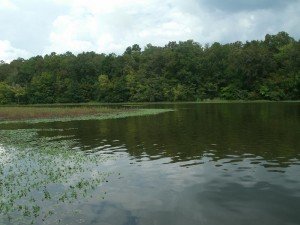
On Alabama’s Lay lake (impounded in 1914), this can mean an angler then having to choose what type of cover to fish and where to fish, for targeting both spotted bass and largemouth bass and observing all the available variables at hand. Their always there, just look!
 With Lay lake there are various types of aquatic weeds for fish holding cover, wood cover of all kinds even piers and boat houses, rocks, boulders, rock bluffs and places displaying man made rip-rap rocks. So as you see, there are a lot of choices to consider.
Included in this “bass cover line up” are loads of other types of man made cover to consider fishing during the winter season. Places like dams, bridges, piers, boat houses and marinas.
With over 50 miles of navigable waters — from Logan Martin Lake dam to downstream Lay lake dam — first time visitors to Lay lake can get very confused as to where to begin their fishing day. Again, always look at previous conditions. Especially the weather!
Factor in mid-Alabama’s late-January to late-February severe winter time cold fronts, then (or in addition to), there can be those cold, mid-to-late winter rainy periods (some that can last a week or more) and then you can get some very undesirable conditions. Like highs in the thirties and nighttime lows in the teens.
Or in the anglers favor, an unseasonable week-long, winter warming trend can take place. Again, you have many “variables” to consider. Breaking down Lay Lake into an upper half and a lower half, here are some helpful tips and lure suggestions, for targeting both the Coosa River Spotted Bass and Lay lake’s Largemouth Bass. Both bass species of which
are found in abundance lake wide, even during the late winter early to early spring period.
LOGAN MARTIN LAKE DAM (UPPER LAY LAKE’S HEADWATERS) TO WILSONVILLE STEAM PLANT AT MID LAKE
 SPOTTED BASS - During the late January to late February period big spotted bass gather in these Lay lake headwaters to feed and fatten up all throughout these current laden waters. Swift water, often stained water and often, cold water
temps in the mid 40’s, can position these spotted bass tight to cover.
From Lay lake’s headwaters to mid lake at Wilsonville steam plant, is similar to fishing winter time waters featured on any long, winding river system. Heavy ½ ounce to ¾ ounce jig combos work great during these types of conditions. These lures simulate the many types of crayfish that these spotted bass dine on.
These tasty crustaceans are found all among the rocky, boulder-stream tailrace waters of upstream Logan Martin lake dam. Choosing jig models with built in rattles is suggested especially during off colored water conditions. Crayfish are lethargic often moving very slow along the lake bottom in cold water conditions. So should the presentation of your lure…fish slow.
Colors of black and blue combos, or colors such as all pumpkinseed, all watermelon / black flake, all brown on brown w/tiger striped strands, or triple colors combos like brown, black and pumpkinseed jig combinations, are all good color choices.
Oversized trailers on these jig combos such as a big piece of pork, a big plastic chunk, big plastic crayfish imitation, frog imitation, beaver, lizard type trailer, or even a trailing, creature type bait, may be needed to aid an angler in attaining a slow lure fall and help create a bigger, more easy to find lure profile. For enticing big, slow lethargic bass as well!
There are many laying trees, stumps, log jams and brushpiles to consider probing your lures in and around. Some anglers slowly flip or pitch jig combos, tube baits, big worms, oversized lizards and other bottom fished lures in and around this upper lake wood cover.
Eddies, places void of current, just out of the swift current are where bass lay inwait for an easy meal. These bass can be located right along the edge, hugging these eddies along the many different types of wood and rock cover found in these lake headwaters. So throughly fish all cover, slow.
* Some of Lay lakes anglers have discovered that a technique known as “swimming a jig” combo works great here for targeting bass holding along the edge of wood cover and rock cover. It is also a technique that is great for covering water fast with a swimming jig combo technique in winter.
Heavy line of 17-20 pound test of either monofilament, heavy 30-50 pound braided line or 17-20 pound test fluorocarbon line is suggested. Strong rods with plenty of backbone and good dependable reels are needed for getting these very strong bass out of cover and into the boat.
 LARGEMOUTH BASS - Although these lake headwaters are considered great places
to target spotted bass, anglers should always keep in mind there are some big
largemouth bass living here too.
Big baitfish such as gizzard shad, threadfin shad and bream are in abundance in these lake headwaters. Like the spotted bass, these largemouth bass dine on baitfish and crayfish all throughout the winter months as well. So jig combos still work for much bigger adversaries!
Jig combos are great lure choices for targeting both of these bass species in these Lay lakes headwaters. Both species feed on crayfish year round in Lay lake. Swim baits, both soft bodied and hard bodied models, including oversized swim bait models with jointed bodies, are great lure choices for targeting these big largemouth bass as well.
Shad colors, bream colors and crappie colors on your swim baits selections are good choices. Strong hooks, long strong rods and strong line are suggested. Mid-to-deep diving crank baits in shad colors, crayfish colors or some red or chartreuse added, are also good lure and color choices.
Both floating and suspending hard bodied jerkbaits and rattling lipless lures in
shad colors simulate the baitfish found here. Try shad or crayfish imitation
colors, chartreuse or white. Always try various selections of 1/2 ounce to 3/4 ounce chartreuse and white spinnerbaits with either gold or silver #5 to #7 Colorado and Willow
leaf blade combinations on the blades.
These are all great lure choices in winter for big largemouth bass hiding among all the wood cover found in Lay lake’s often stained, lake headwaters.
WILSONVILLE STEAM PLANT TO LAY LAKE DAM / MID TO LOWER LAKE
 Main lake aquatic weeds will become more evident the further you fish downstream on Lay lake, all the way to Lay lake dam. * Fishing from below Logan Martin lake dam to Highway 280 bridge crossing, is mostly for targeting bass around wood and rock cover.
Lay lake will begin to display a more lake-like appearance as you head further downstream of Wilsonville steam plant, located right beside incoming feeder, Yellow Leaf Creek at mid lake. You will also evidently begin to see a variety of aquatic weeds both on the main lake and up in its dozens of major feeder creeks and smaller pockets. This calls for the use of weed less lures!
 Topwaters too, like frogs, zara spooks, buzz baits, work great. Try weed less spoons, spinnerbaits, floating worms, frog and rat imitations, slow sinking Senkos and Zoom Trick worms. They will work exceptionally well, especially when fished around weeds during or following winter warming trends.
* Fish these types of lures in and around the weeds, as the day warms up. Most bites are from midday to late evenings. Look for baitfish in any spot!
As you pass the islands about one mile below Wilsonville steam plant, many major feeder creeks, main lake flats and small cuts and pockets become more evident. The mouths of these out of the current places are wintertime holding spots for big schools of bass!
 Heading on down the lake you will see rock bluffs and some deeper water (of over 70 feet deep) in the narrows area. Rip-rap rocks along the dam as well. Jigging spoons or fishing with tail spinner lures in deep water of 20-40 feet deep works good both during the winter and summer months.
Resident built piers and boat houses adorn this lower lake region. All kinds of lures like worms, lizards, tube baits, jig combos, creature baits and finesse plastics work great during winter around these piers and boat houses, mostly found on the mid-to-lower lake.
 SPOTTED BASS - Most anglers target Lay lakes spotted bass on the main lake. Ledges, drop-offs, creek mouths, islands and around rock bluffs featuring standing timber, are places that all hold quality sized spotted bass all throughout the winter season.
Rock bluffs are especially good places to fish with bream and shad colored crankbaits, chrome lipless lures, shad or bream colored swim baits, white or chartreuse spinner baits and suspending hard bodied jerk baits in shad colors.
Finesse worms rigged on jig heads or try Texas rigged and Carolina rigged worms, lizards and crayfish plastics. Colors of water melon / black flake or black, red, blue or pumpkinseed are good worm colors.
* Try rocky points and the mouths of small cuts and pockets along rock bluffs with these finesse jigs, fishing in water up to 30 feet deep with 6-8 pound test monofilament or fluorocarbon line.
 LARGEMOUTH BASS - Living right next to the spotted bass, largemouth bass can
occupy wood or rock cover. But during late winter the bigger largemouth bass
really prefer the more thicker, matted-type weeds close to the security of deep
water near by.
Look for big largemouth bass around various types of mixed in wood, weeds and rock cover. They can often be found in abundance around isolated wood cover (like one, lone laying tree) in this mid-to-lower lake region. Or found mingling with spotted bass along standing timer and weeds leading into small cuts and pockets on the lower lake.
Lay lake’s largemouth bass thrive around aquatic weeds year round on the mid to lower lake. Weeds provide plenty of oxygen and plenty of green cover for them to hide in. But in winter some weed types die off. So late winter anglers should look for the greener weeds (like those that receive a lot of sunshine throughout the day), for the most oxygen- rich environment for these largemouth bass and the prey they dine on, to relate to.
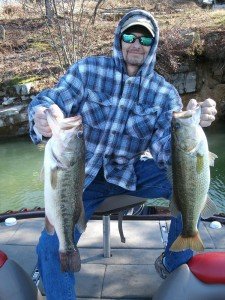
Try Lay Lake during this late winter period. Some of the years biggest spotted bass and some huge largemouth bass are taken by anglers that outweigh the odds when searching for big winter bass on Alabama’s Lay lake!
Thanks and Good Fishin’ This Winter! Reed Montgomery / Reeds Guide Service Website www.fishingalabama.com (205) 663-1504 Birmingham, Al.


